

Description
Product Overview
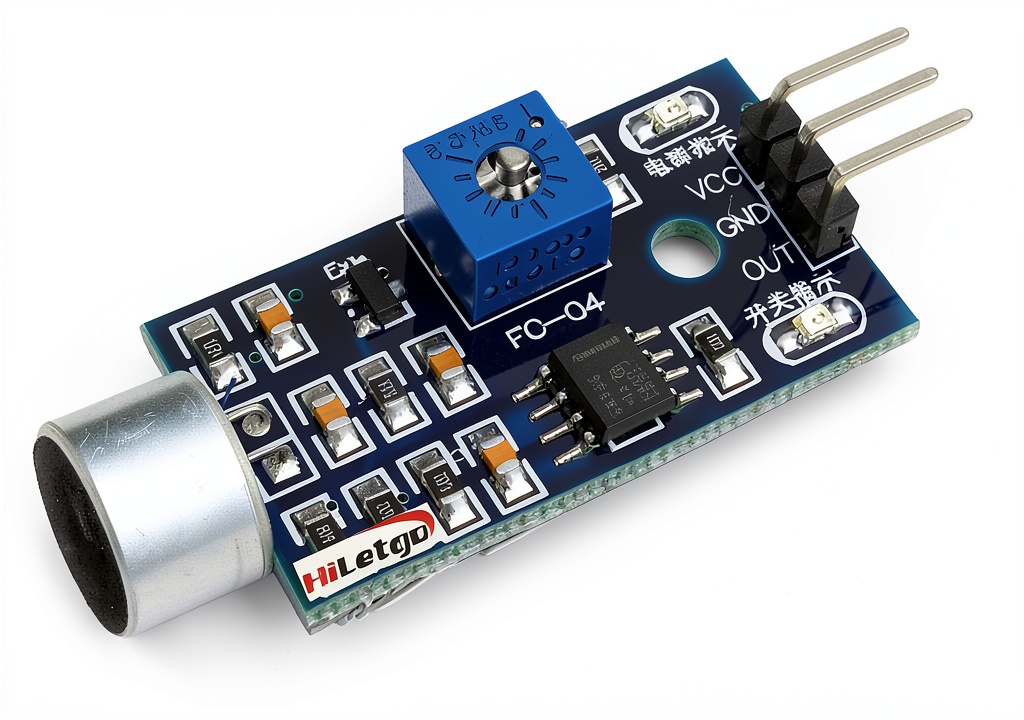
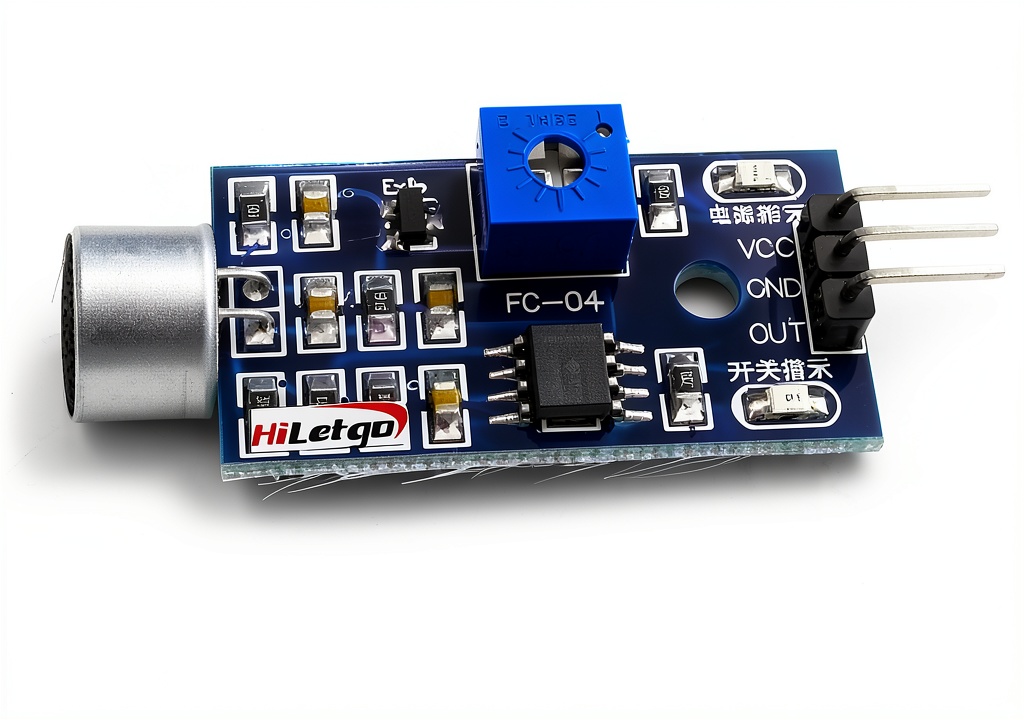
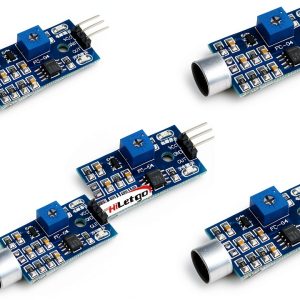
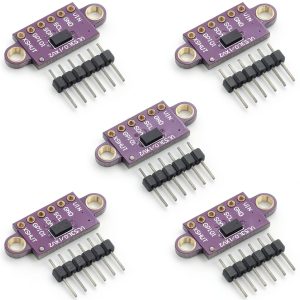
The HiLetgo 5‑piece Sound Sensor Module is a compact, low‑cost solution engineered for detecting acoustic signals such as voice commands, claps, and ambient noise. Each module operates on a wide voltage range of 3.3 V to 5 V, making it compatible with most microcontroller platforms, including Arduino, ESP8266, and Raspberry Pi. The sensor utilizes a built‑in microphone and an LM393 comparator circuit to convert sound pressure into a clean digital output, allowing developers to trigger actions without the need for complex analog processing.
Physically, the module measures 4.57 × 2.83 × 0.55 inches and weighs only 0.81 ounces, ensuring that it can be mounted on breadboards, terminal blocks, or custom PCBs with minimal space consumption. The package includes five identical sensor units, each pre‑wired with VCC, GND, and OUT pins, simplifying the wiring process and reducing development time. The robust construction, featuring a metal‑shielded microphone capsule, provides reliable performance even in noisy environments.
Key specifications include a detection sensitivity that can be adjusted via an onboard potentiometer, a fast response time of less than 10 ms, and a low power consumption of under 10 mA during active detection. The module is certified for safety and complies with standard industrial electrical regulations, ensuring durability for long‑term projects.
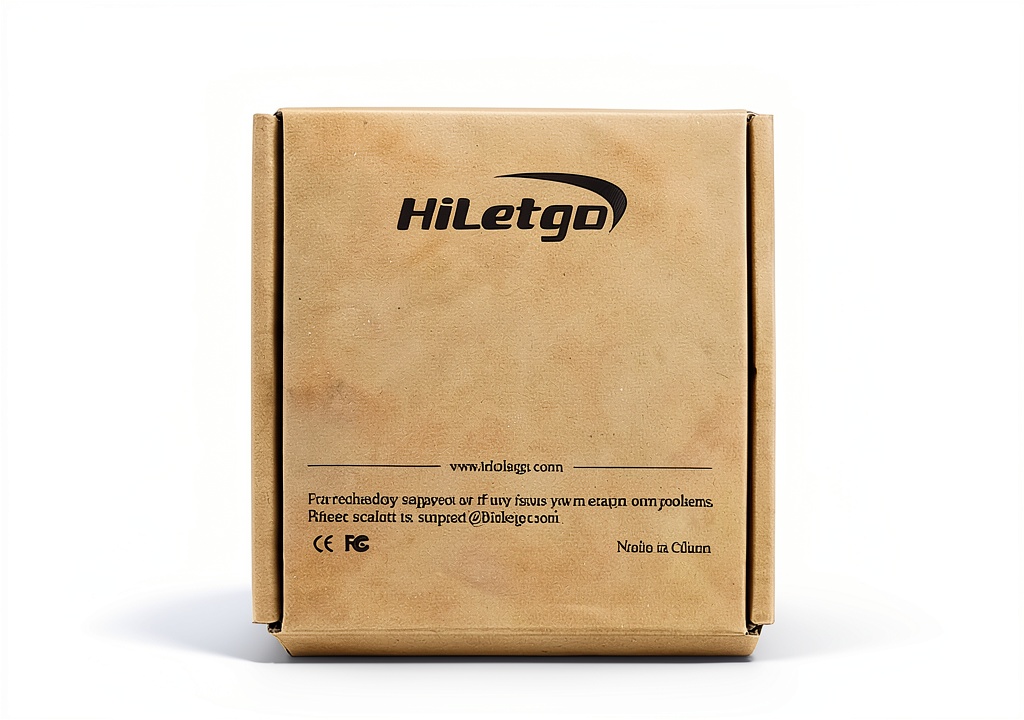
![[Product front view showing all components]](https://www.canvasart.store/wp-content/uploads/2026/08/c18e84b6c65f4309a974e488397147bc.jpg)
Usage
Designed with versatility in mind, the HiLetgo Sound Sensor Module can be employed across a broad spectrum of applications. In smart home projects, the sensor can detect claps or voice commands to control lighting, fans, or door locks, providing a hands‑free experience. Robotics enthusiasts can integrate the module to enable sound‑activated navigation, allowing robots to respond to verbal cues or environmental noises.
For educational purposes, the module serves as an excellent teaching tool for students learning about signal processing, digital logic, and IoT concepts. Its straightforward interface—simply connect VCC to 3.3 V or 5 V, GND to ground, and OUT to a digital input—means that beginners can quickly prototype sound‑reactive devices without extensive circuitry knowledge.
In industrial settings, the sensor can be used for equipment monitoring, where abnormal noise levels indicate potential malfunctions. By pairing the module with a microcontroller and a cloud service, engineers can set up real‑time alerts and predictive maintenance workflows. The module’s ability to operate reliably in a range of temperatures and its resistance to electromagnetic interference make it suitable for harsh environments.
Why Choose Us
HiLetgo is a trusted brand known for delivering high‑quality electronic components at competitive prices. Each Sound Sensor Module undergoes rigorous testing to ensure consistent performance across all units. Our commitment to quality is reflected in the low failure rate and the positive feedback from a global community of makers and professionals.
When you purchase the HiLetgo sensor package, you receive not only the hardware but also comprehensive documentation, including wiring diagrams, example code snippets, and troubleshooting guides. Our technical support team is available to assist with integration challenges, firmware updates, and custom configuration advice, ensuring that your project progresses smoothly from concept to deployment.
Furthermore, we stand behind our products with a 30‑day satisfaction guarantee and a straightforward return policy. This confidence in our product durability and performance underscores our dedication to customer success and long‑term partnership.
Key Features
- Five sensors in one package provide redundancy and enable multi‑zone sound detection for complex projects.
- Adjustable sensitivity via onboard potentiometer lets you fine‑tune detection thresholds for various environments.
- Wide operating voltage (3.3 V‑5 V) ensures compatibility with most microcontroller boards and power supplies.
- Fast digital output response (<10 ms) enables real‑time control of lights, motors, and actuators.
- Dedicated customer support and detailed documentation simplify integration and reduce development time.
FAQ
What voltage should I use for the sensor?
The module works reliably with either 3.3 V or 5 V power sources. Choose the voltage that matches your microcontroller’s logic level to avoid the need for level shifting.
Can I use the sensor with a Raspberry Pi?
Yes. Connect the VCC pin to a 3.3 V or 5 V pin on the Raspberry Pi, GND to ground, and the OUT pin to a GPIO input. Use a pull‑up resistor if required by your specific GPIO configuration.
How do I adjust the detection sensitivity?
Turn the small potentiometer on the module clockwise to increase sensitivity (detect quieter sounds) or counter‑clockwise to decrease sensitivity (ignore background noise). Test the setting in your target environment for optimal performance.
Is the sensor suitable for outdoor use?
The sensor is designed for indoor applications. For outdoor use, protect the module with a waterproof enclosure and ensure that the microphone opening is not obstructed.
What is the typical current consumption?
During active detection the module draws less than 10 mA, making it suitable for battery‑powered projects where power efficiency is critical.















































































Reviews
There are no reviews yet.