
Description
Product Overview
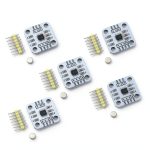
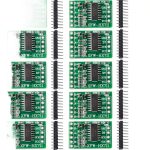
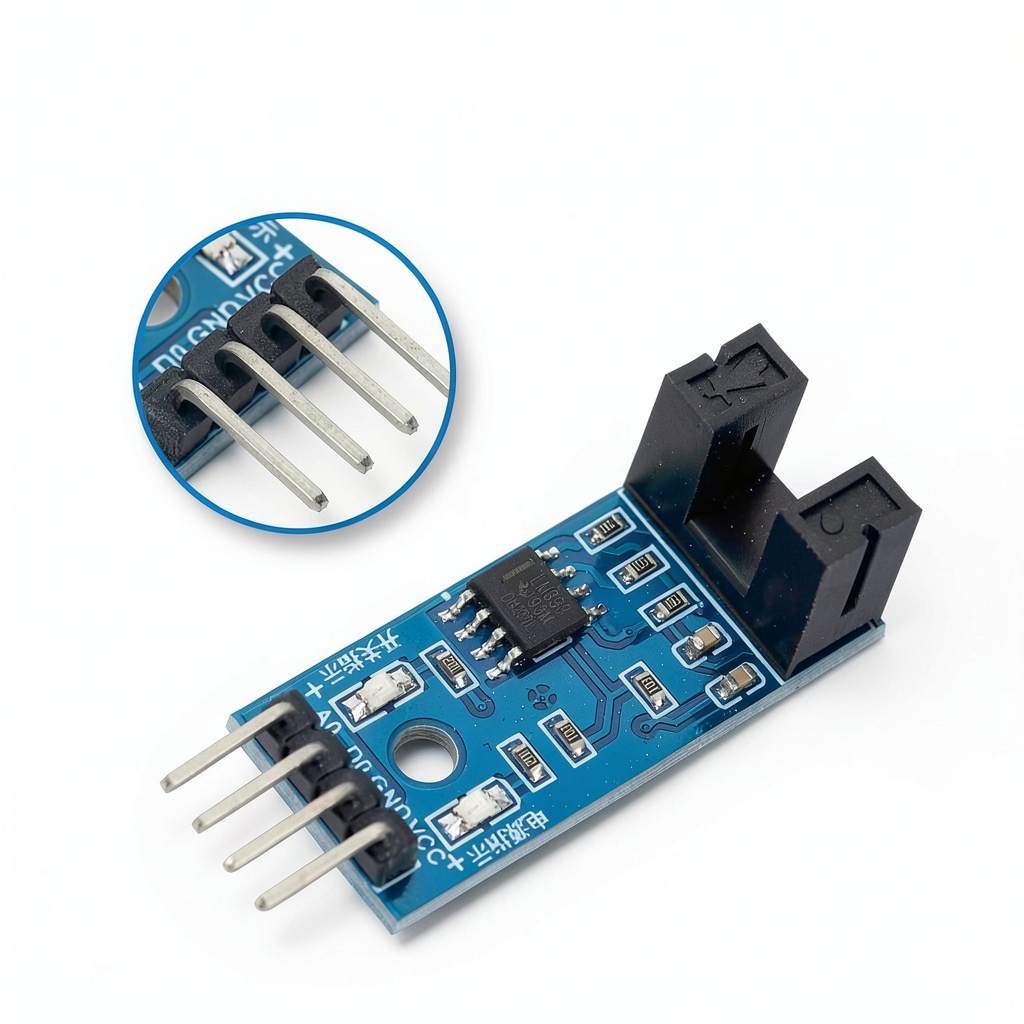
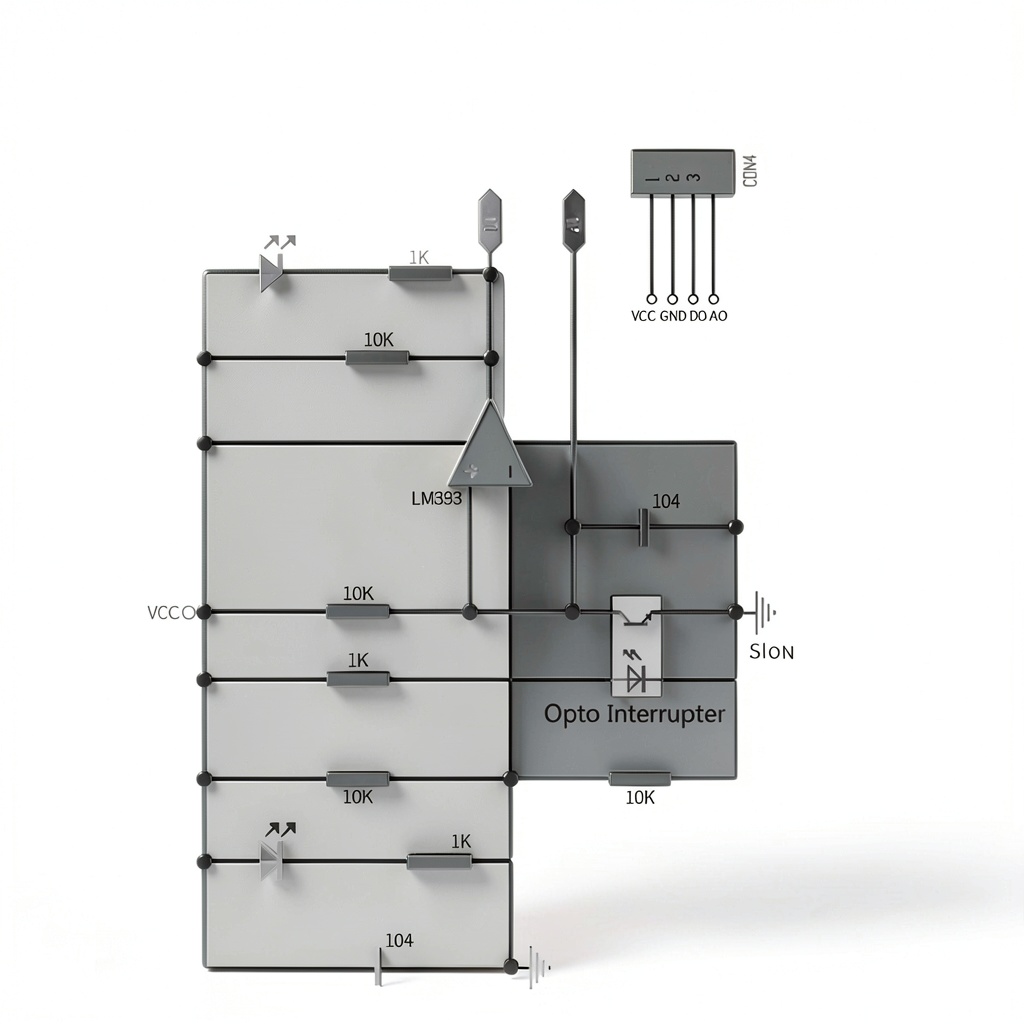
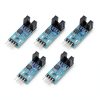
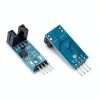
The Podazz LM393 speed sensor module is engineered for developers who need accurate motor speed measurement and pulse counting in compact electronic projects. Each package includes five identical sensor boards, each featuring a high‑precision LM393 comparator chip paired with an infrared optocoupler. The module operates on a wide voltage range of 3.3 V to 5 V, making it compatible with most Arduino boards, ESP32, Raspberry Pi Pico, and other popular microcontrollers.
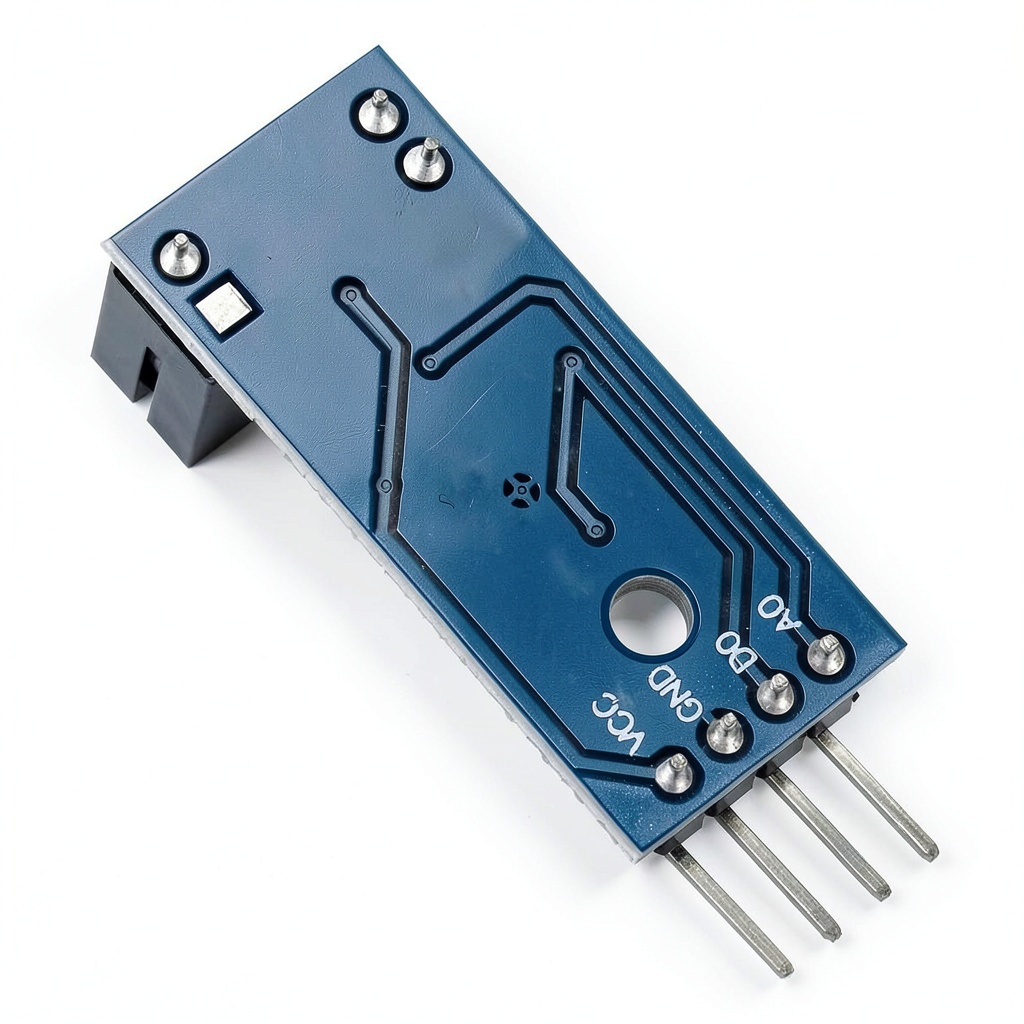
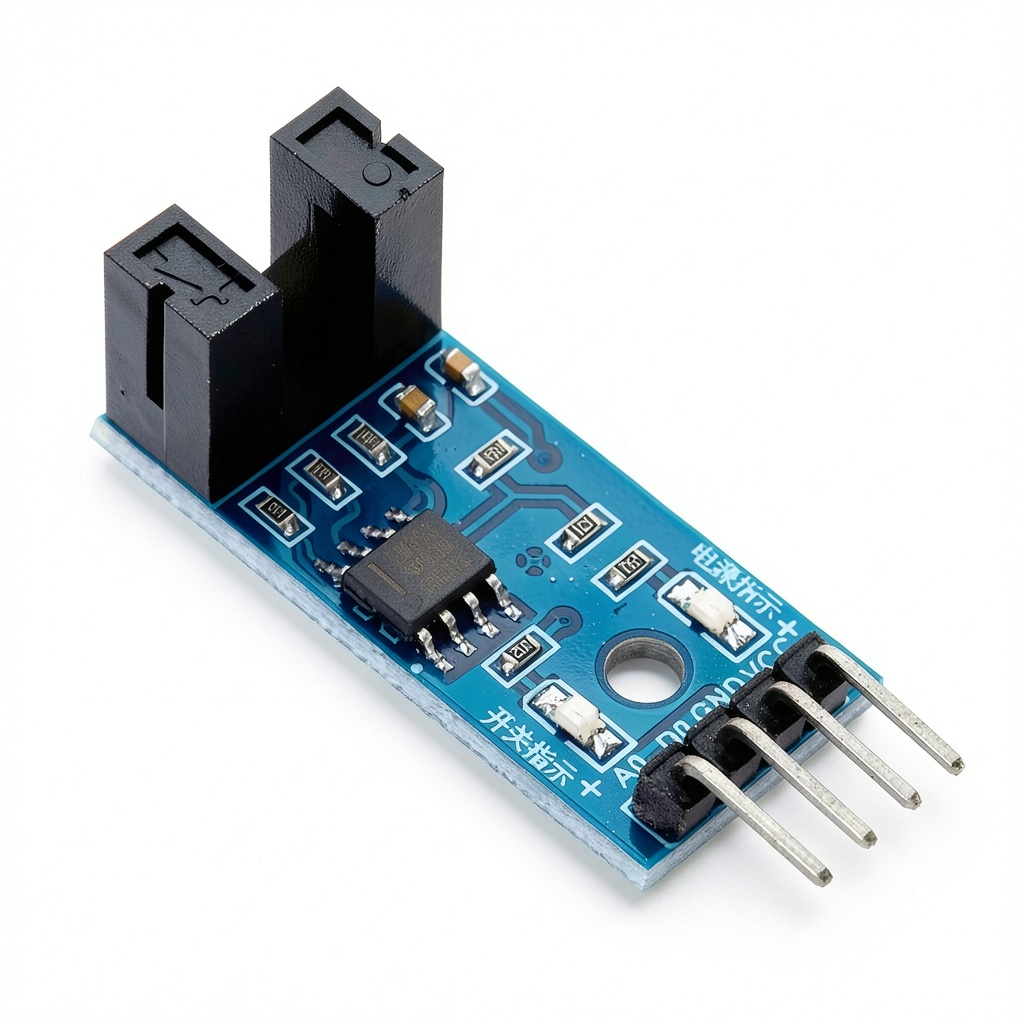
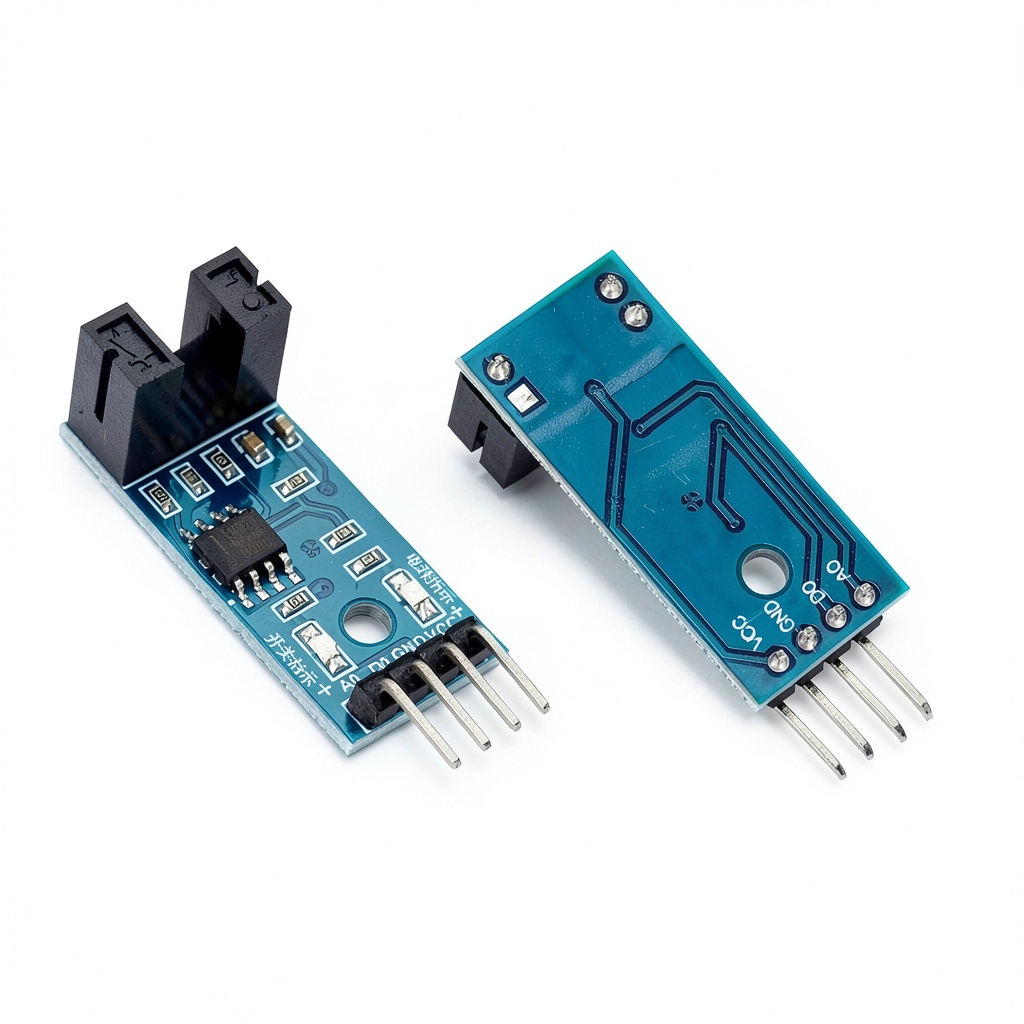
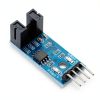
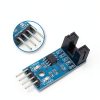
Physically, the sensor board measures 33 mm by 14 mm (1.3″ × 0.55″), with a 5 mm slot width that accommodates a variety of motor shafts and rotating components. The PCB is fabricated from high‑quality FR‑4 material, ensuring durability under continuous operation and resistance to environmental factors such as humidity and temperature fluctuations. The optocoupler isolates the motor circuit from the microcontroller, providing electrical safety and reducing noise interference.
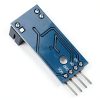
Key specifications include a net weight of only 4 grams per board, a fast response time suitable for high‑speed applications, and a simple three‑pin interface (VCC, GND, and OUT) that streamlines wiring. The module’s design emphasizes ease of integration: the 3 mm mounting holes align with standard prototyping boards, and the compact form factor allows for dense placement in multi‑sensor arrays.
Beyond basic speed detection, the LM393 module can be employed for position limiting, where the sensor signals the microcontroller when a rotating part reaches a predefined point. This capability is valuable in robotics, CNC machines, and automated conveyor systems where precise motion control is essential. The module’s versatility also extends to educational settings, offering students a hands‑on tool to explore concepts such as pulse width modulation, frequency measurement, and feedback control loops.
Podazz has incorporated quality assurance processes throughout manufacturing, including automated optical inspection and functional testing of each comparator circuit. This ensures that every sensor board meets stringent performance criteria, delivering consistent output voltage levels and reliable switching behavior across the entire production batch.
Installation is straightforward: connect the VCC pin to the 3.3 V or 5 V rail, ground the GND pin, and route the OUT pin to a digital input on your microcontroller. The module’s output toggles between low and high states in response to the motor’s rotational speed, allowing software to calculate RPM or count pulses with high accuracy.
Overall, the LM393 speed sensor module provides a cost‑effective, high‑performance solution for a wide range of applications, from hobbyist prototypes to industrial automation projects. Its combination of robust hardware, flexible voltage operation, and simple interfacing makes it a go‑to choice for engineers seeking dependable motor monitoring capabilities.
![[Product front view showing all components]](https://www.canvasart.store/wp-content/uploads/2026/08/8e0b0e052ef140d4913718676d8d3e04.jpg)
Usage
In robotics, the LM393 module can be mounted on wheel shafts to monitor rotational speed, enabling closed‑loop speed control algorithms that maintain consistent movement across varying loads. By feeding pulse counts into a microcontroller, developers can implement precise velocity regulation, obstacle avoidance, and path planning.
For CNC machining, the sensor serves as a reliable spindle speed monitor. When integrated with a feedback controller, it helps maintain the desired cutting speed, improving surface finish quality and reducing tool wear. The optocoupler’s isolation protects sensitive control electronics from the high‑current motor environment.
In conveyor belt systems, the module detects belt speed and can trigger alarms or adjust motor drive signals if the speed deviates from set thresholds. This real‑time monitoring enhances safety and efficiency in manufacturing lines, where timing synchronization is critical.
Educational labs benefit from the module’s simplicity. Students can quickly set up experiments to measure motor RPM, explore the relationship between voltage, current, and speed, and develop software routines for pulse counting and frequency analysis. The clear three‑pin layout reduces wiring errors, allowing learners to focus on programming concepts.
For hobbyist projects, such as remote‑controlled cars or drones, the sensor provides essential data for telemetry dashboards, enabling users to view live speed metrics on a smartphone or PC interface. The low power consumption ensures that battery life remains optimal even during extended operation.
When used in smart home applications, the module can monitor fan speeds or ventilation systems, feeding data to home automation platforms that adjust airflow based on environmental conditions. Its compact size allows seamless integration into existing enclosures without compromising aesthetic design.
Why Choose Us
Podazz is committed to delivering high‑quality electronic components that meet the rigorous demands of both professional engineers and enthusiastic makers. Our LM393 speed sensor module stands out due to its meticulous design, thorough testing, and responsive customer support.
Each sensor board undergoes functional verification to confirm that the comparator threshold and optocoupler response meet the advertised specifications. This quality control process minimizes the risk of defective units, ensuring that your project proceeds without unexpected setbacks.
We provide comprehensive documentation, including wiring diagrams, example Arduino code, and detailed datasheets that simplify integration. Our online resources are regularly updated, and our technical support team is available to assist with troubleshooting, firmware optimization, and application advice.
Beyond the product itself, Podazz offers a flexible return policy and warranty coverage that reflects confidence in the durability and performance of our components. When you purchase the LM393 module, you gain access to a community of developers who share project ideas, code snippets, and best practices, fostering collaborative innovation.
Choosing Podazz means selecting a partner that values reliability, transparency, and continuous improvement, ensuring that your designs achieve the highest standards of functionality and longevity.
Key Features
- Five identical sensor boards provide redundancy and flexibility for multi‑sensor setups.
- Wide operating voltage (3.3‑5 V) ensures compatibility with most microcontroller platforms.
- Integrated infrared optocoupler isolates motor circuitry, reducing electrical noise and protecting the controller.
- Compact PCB (33 × 14 mm) and lightweight design enable easy mounting in tight spaces.
- Responsive customer support and detailed documentation for quick project deployment.
FAQ
What voltage range does the LM393 module support?
The module operates safely from 3.3 V up to 5 V, making it suitable for a broad range of microcontroller boards, including Arduino Uno, Nano, Mega, and ESP32‑based systems.
How do I connect the sensor to an Arduino?
Connect the VCC pin to the 5 V (or 3.3 V) rail, the GND pin to ground, and the OUT pin to any digital input pin on the Arduino. Use the provided example code to read the pulse signal and calculate RPM.
Can the sensor be used for position limiting?
Yes, the LM393 comparator can be configured to trigger when a rotating shaft reaches a specific position, allowing you to stop a motor or change direction based on the sensor output.
Is the module suitable for high‑speed motors?
The fast response time of the LM393 chip makes the module capable of handling high‑speed rotations, though extremely high RPM applications may require additional signal conditioning to ensure accurate pulse detection.
What warranty does Podazz provide?
Podazz offers a one‑year limited warranty covering manufacturing defects, along with a 30‑day return policy for any issues related to product performance or compatibility.
Reviews
There are no reviews yet.