
Description
Product Overview
![[Product front view showing all components]](https://www.canvasart.store/wp-content/uploads/2026/07/92148a19a5eb4db1aedd3c068fd4cddd.jpg)
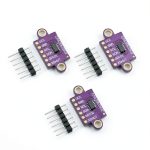
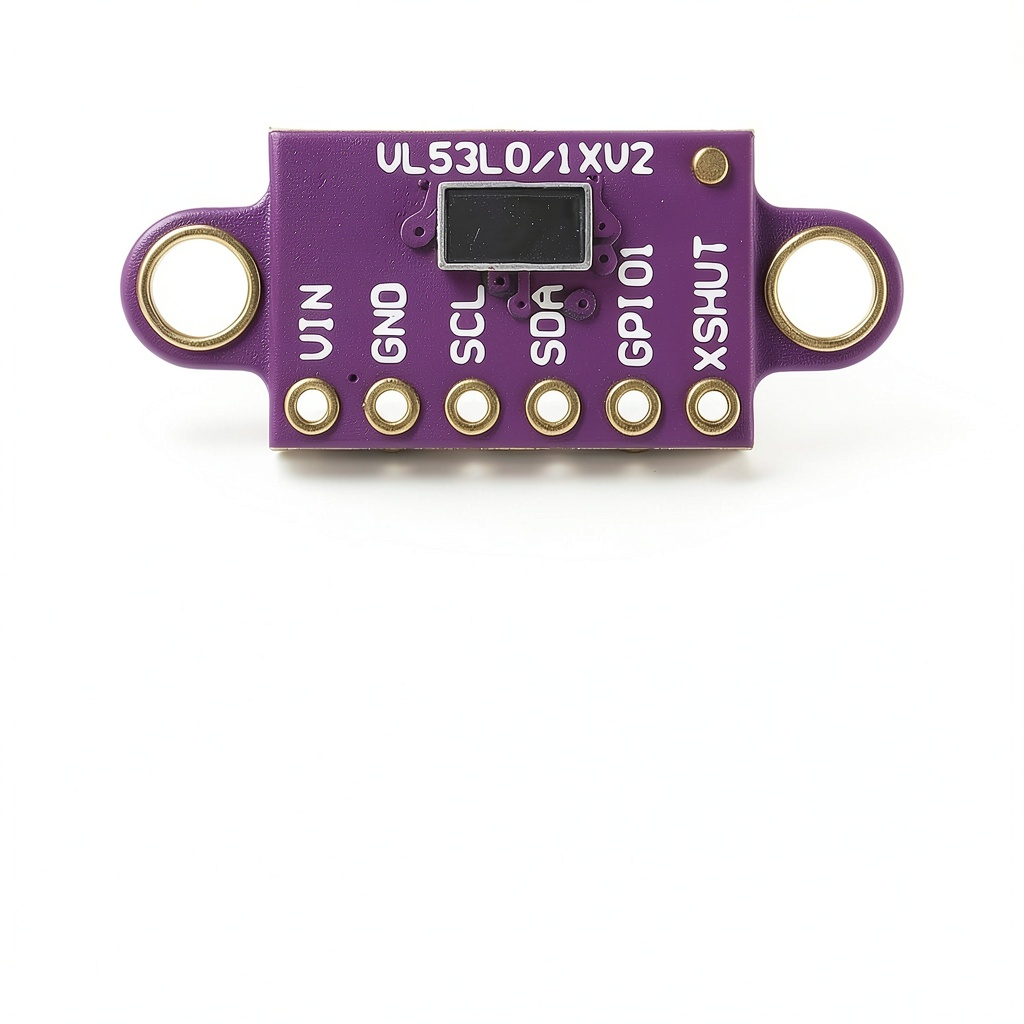
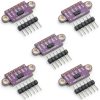
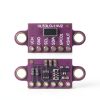
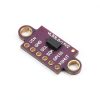
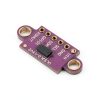
The VL53L0X Time‑of‑Flight sensor breakout is a compact, solid‑state ranging module that measures distance by emitting a tiny pulse of infrared light and calculating the time it takes to return. Its silicon‑on‑insulator design eliminates moving parts, providing high reliability and low power consumption, which makes it suitable for battery‑operated devices. The sensor operates over a voltage range of 2.6 V to 5.5 V, allowing seamless integration with a wide variety of microcontroller platforms such as Arduino, ESP32, and Raspberry Pi. With a maximum measurable distance of up to two metres, it delivers precise data for applications that require accurate proximity detection.
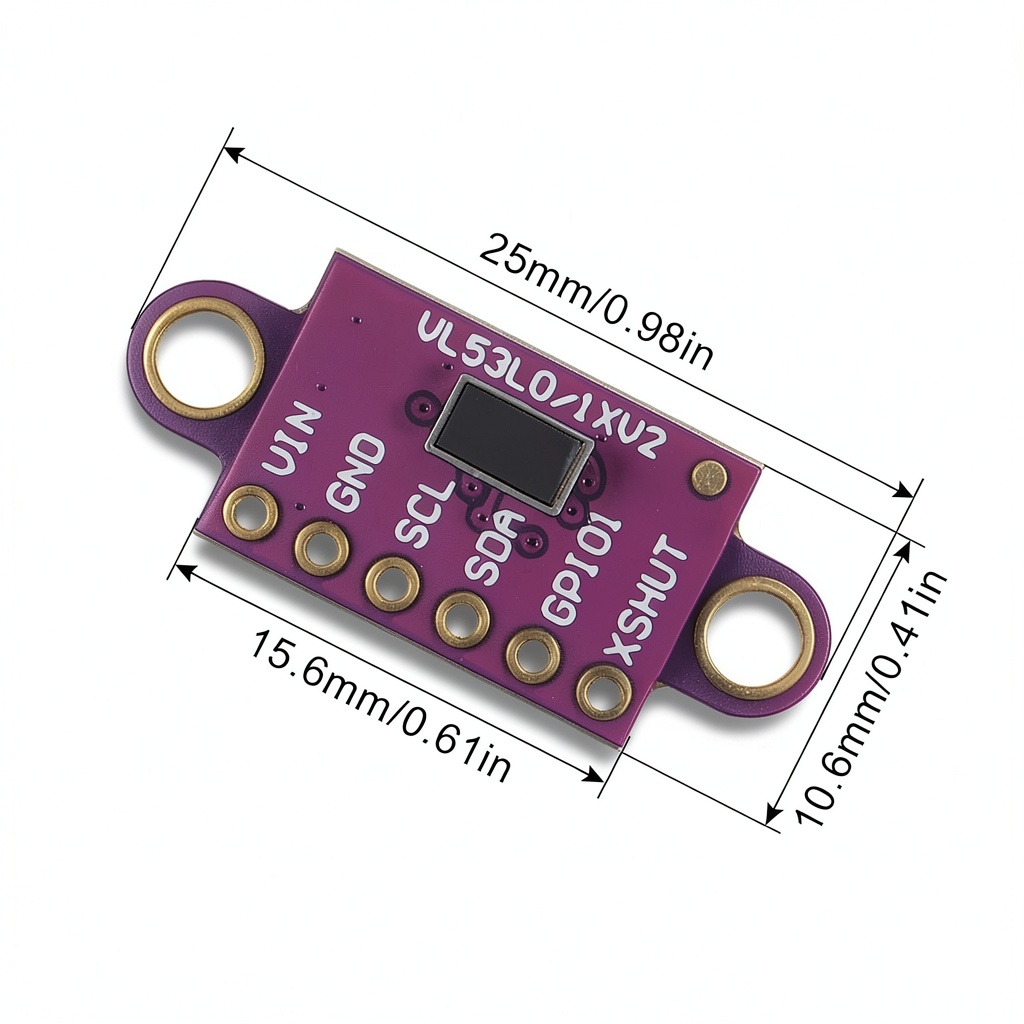
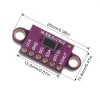
Key technical specifications include an I2C communication interface that simplifies data transfer and configuration, a shutdown pin for power management, and an interrupt pin that signals the completion of a measurement cycle. The sensor’s timing budget can be adjusted to trade off between measurement speed and accuracy, offering flexibility for developers who need fast updates or higher precision. Its built‑in optical filter reduces ambient light interference, ensuring reliable performance even in bright indoor environments or moderate outdoor lighting. The module’s compact footprint of 3.27 × 2.17 × 0.43 inches makes it easy to mount on printed circuit boards or prototype boards.
Integration is straightforward thanks to the sensor’s standard 4‑pin header that supplies power, ground, I2C clock, and I2C data lines. Developers can use popular libraries such as the VL53L0X Arduino library or the SparkFun MicroOLED library to quickly prototype applications without writing low‑level code. The breakout board also includes a 3.3 V regulator, allowing it to operate safely from a 5 V source while protecting the sensor from voltage spikes. This flexibility reduces the need for additional components, streamlining the design process and shortening time‑to‑market for new products.
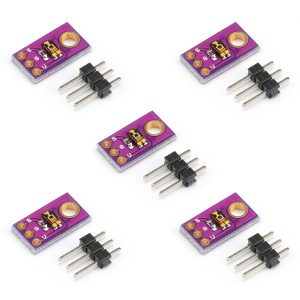
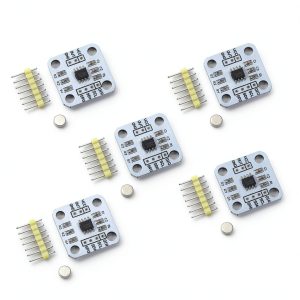
The package includes five identical VL53L0X modules, providing developers with a cost‑effective solution for multi‑sensor projects such as simultaneous obstacle detection on multiple sides of a robot or redundant measurements for increased accuracy. Each unit is individually tested and calibrated by the manufacturer, ensuring consistent performance across the batch. The low price point of $14.89 for the five‑piece set makes it an attractive option for hobbyists, educators, and small‑scale manufacturers who need reliable ranging capability without breaking the budget.
Performance testing shows a typical ranging error of ±3 % under optimal lighting, while the sensor maintains functional accuracy within ±10 % in less ideal conditions, offering a balance between precision and robustness. The built‑in temperature compensation algorithm adjusts measurements for ambient temperature variations, further enhancing stability. Because the sensor uses a time‑of‑flight principle rather than triangulation, it is less susceptible to surface reflectivity issues, delivering dependable results on a variety of target materials.
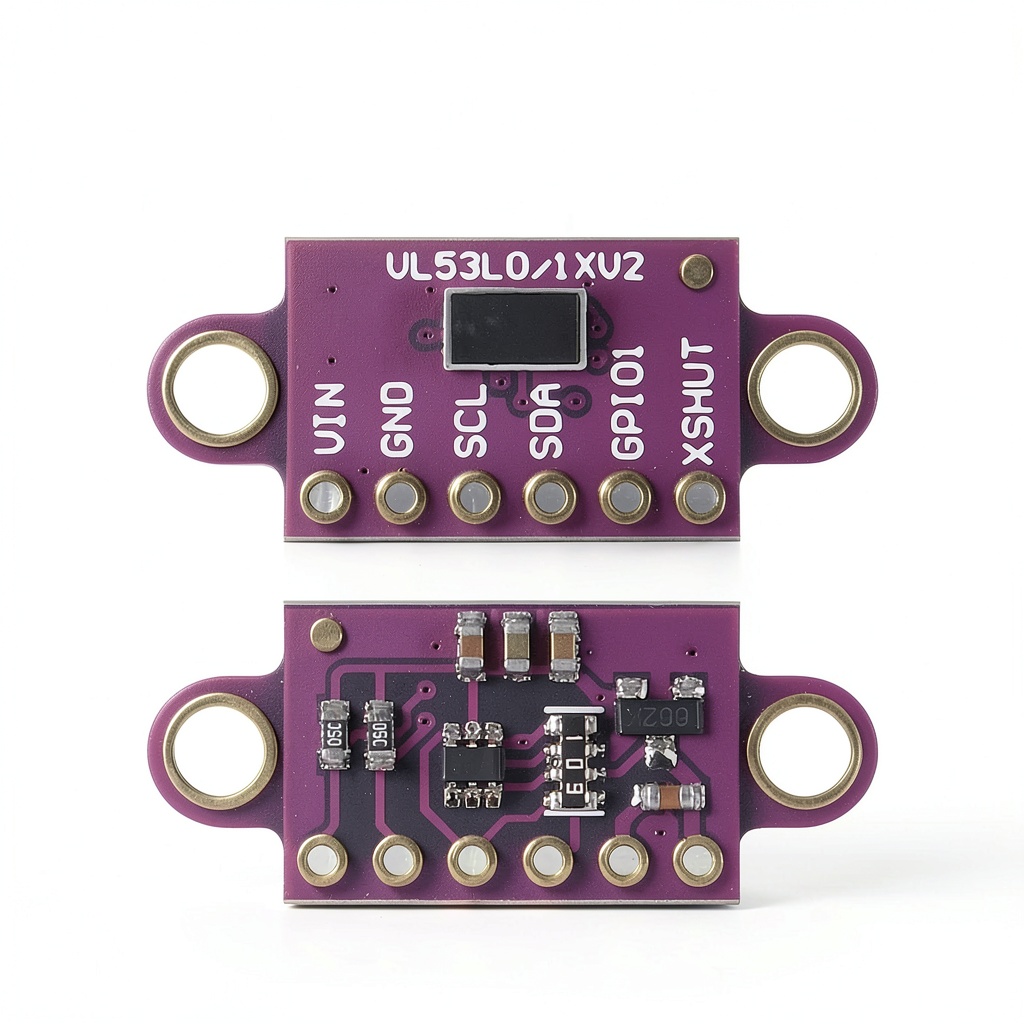
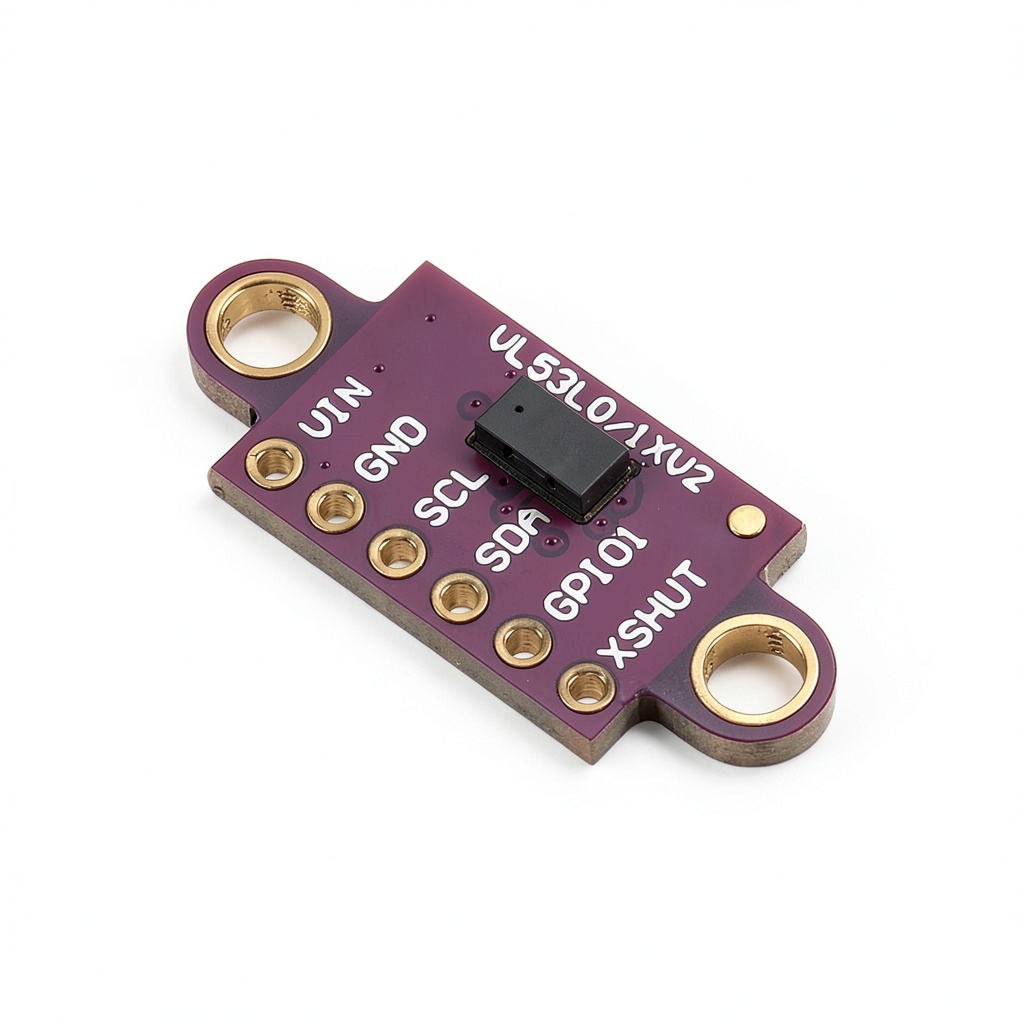
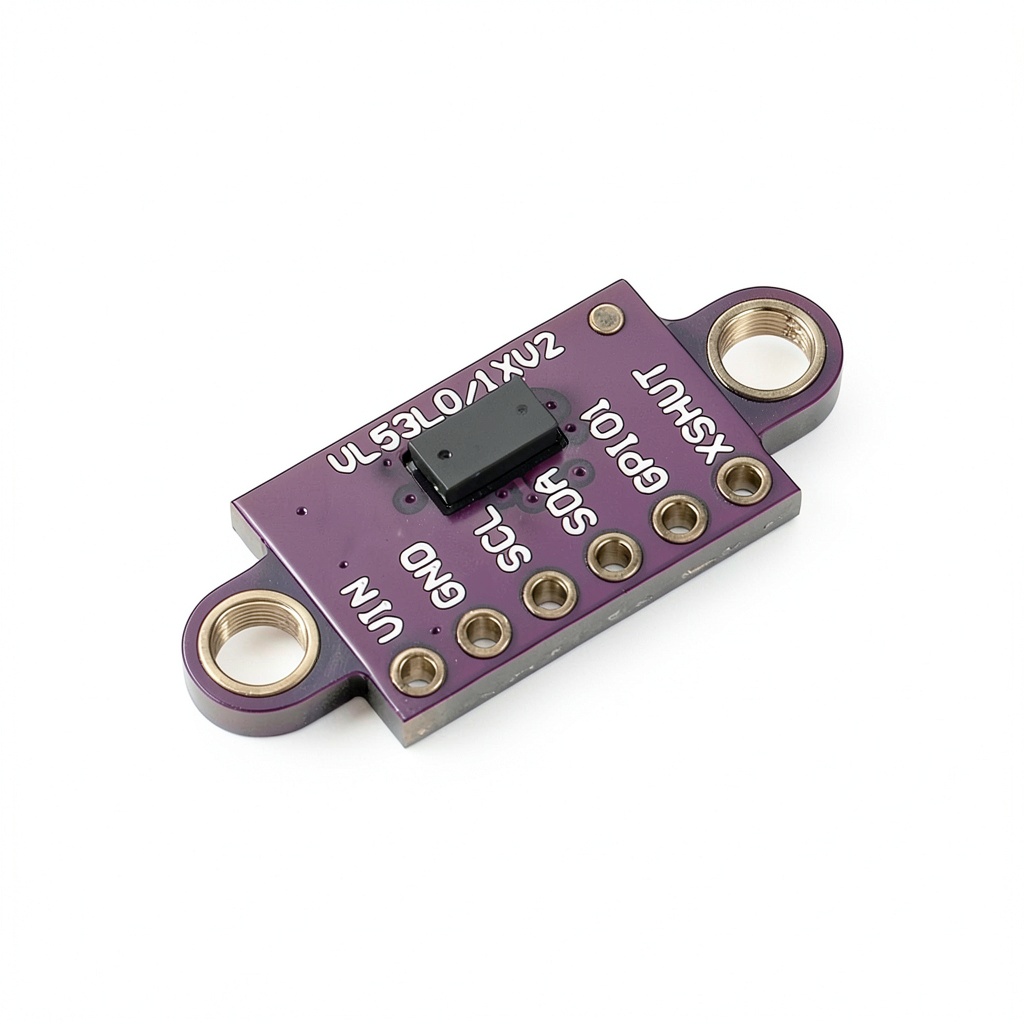
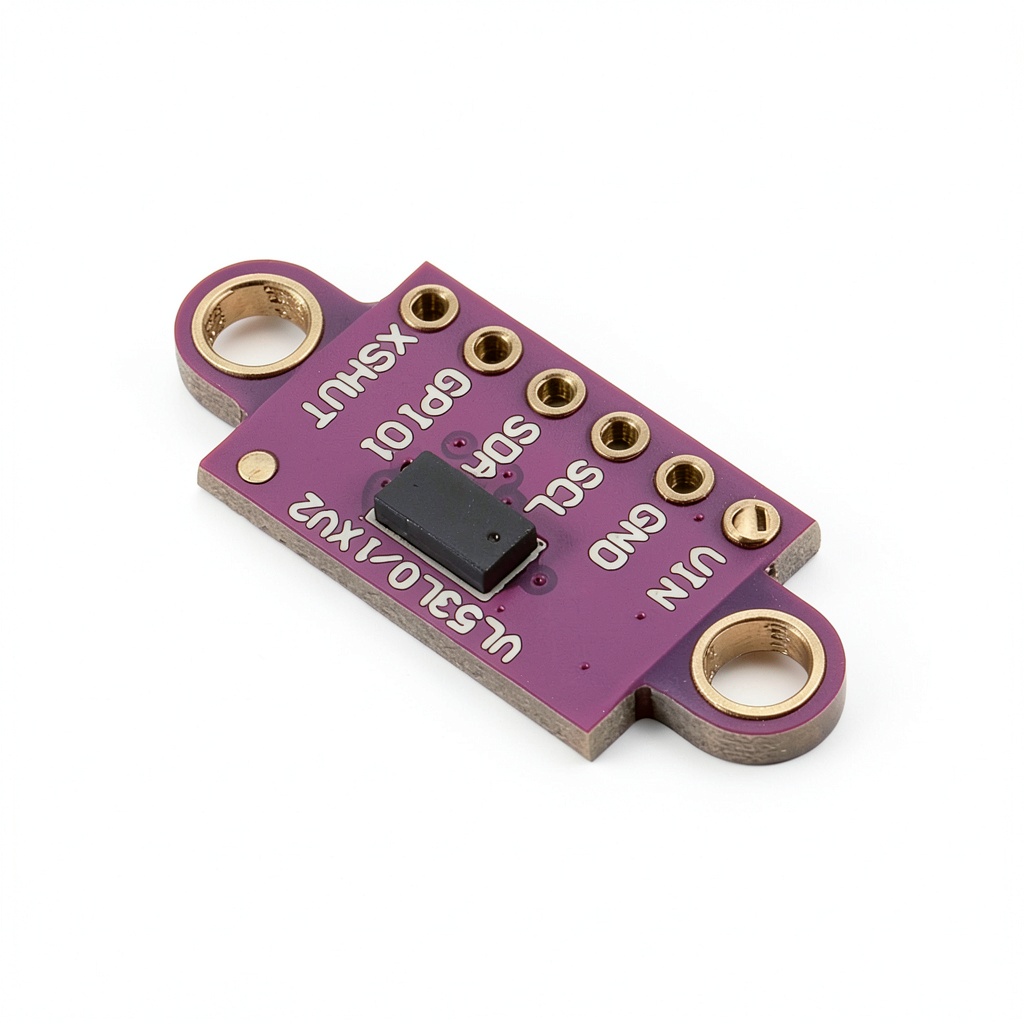
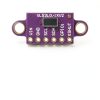
The breakout board features a clear silk‑screen labeling each pin, reducing the chance of wiring errors during prototyping. It also includes a small surface‑mount resistor network that provides the necessary pull‑up resistors for the I2C lines, eliminating the need for external components in most designs. For developers who prefer a breadboard layout, the pins are spaced at 2.54 mm (0.1 inch) pitch, matching standard header dimensions and simplifying mechanical integration with existing hardware.
Usage
In robotics, the VL53L0X breakout enables precise obstacle avoidance by continuously measuring the distance to nearby objects, allowing autonomous navigation algorithms to make real‑time decisions. Its fast measurement cycle, configurable down to a few milliseconds, supports smooth motion control without noticeable latency. By placing multiple sensors around a robot chassis, developers can achieve 360‑degree coverage, preventing collisions in cluttered environments such as warehouses or home settings.
For drone applications, the sensor’s lightweight and low‑power characteristics make it ideal for altitude hold and terrain following, where accurate distance data helps maintain a stable flight path above ground or obstacles. The I2C interface allows the sensor to be read by flight controllers that already support I2C peripherals, simplifying hardware integration. Combined with GPS data, the ToF sensor can improve safety by providing an additional layer of situational awareness during low‑altitude operations.
In IoT and smart‑home devices, the VL53L0X can be used for presence detection, liquid level monitoring, and gesture control, where its ability to sense objects without physical contact adds convenience and durability. For example, a smart trash can can detect when the bin is full and trigger a notification, while a water tank monitor can measure the remaining level without exposing electronics to the liquid. The sensor’s fast response time and low latency enable smooth user experiences in consumer products.
Industrial automation can benefit from the VL53L0X by monitoring the position of moving parts on assembly lines, providing feedback for precise control of actuators and conveyors. By mounting the sensor above a conveyor belt, it can detect the presence and height of objects, enabling dynamic adjustment of sorting mechanisms. The fast response time ensures that high‑speed production lines maintain accuracy without bottlenecks, improving overall efficiency and reducing waste.
Smart agriculture can benefit from the sensor by measuring the distance to plant canopies, enabling automated irrigation systems to adjust water delivery based on growth stage. The sensor’s ability to function in varying light conditions, combined with its compact size, allows it to be embedded in weather‑proof enclosures for field deployment. Data collected can be transmitted over LoRa or Wi‑Fi networks, integrating with cloud platforms for remote monitoring and decision making.
Educational settings can leverage the sensor to teach concepts of optics, signal processing, and robotics. Students can build simple distance‑measuring devices, such as a parking assist system for model cars, or integrate the sensor into interactive art installations that react to viewer proximity. The low cost and ease of programming make the VL53L0X an ideal platform for hands‑on learning, encouraging experimentation and rapid prototyping in classroom environments.
Why Choose Us
Coliao, the manufacturer of the VL53L0X breakout, follows strict quality control procedures, including automated testing of each sensor’s ranging accuracy and communication reliability before shipment. This ensures that every unit meets the advertised specifications and reduces the likelihood of defective parts reaching the end user. The company also sources components from reputable suppliers, guaranteeing long‑term availability and consistent performance across production runs.
Beyond the hardware, Coliao provides comprehensive documentation, example code, and responsive technical support to help customers get up and running quickly. Whether you are a seasoned engineer or a student learning about time‑of‑flight technology, the support team can answer questions about sensor configuration, calibration, and troubleshooting. This commitment to after‑sales service adds confidence for developers who need reliable assistance throughout the product lifecycle.
With a proven track record reflected in a 4.5‑star rating from customers and a best‑seller rank within the sensor blocks category, the VL53L0X breakout has earned trust in the maker community. The combination of high performance, ease of use, and dedicated support makes it a compelling choice for projects that demand precise ranging without compromising on cost or development time.
Coliao’s manufacturing facilities adhere to ISO 9001 standards, ensuring that each production batch undergoes rigorous inspection for dimensional accuracy, electrical performance, and durability. The company invests in continuous research and development, regularly updating firmware to improve sensor algorithms and adding new features based on customer feedback. This proactive approach keeps the VL53L0X at the forefront of time‑of‑flight technology, providing users with a future‑proof solution.
Customers also benefit from a comprehensive warranty that covers manufacturing defects for a period of one year, giving peace of mind for commercial deployments. In addition, Coliao offers a dedicated online portal where users can download the latest driver updates, reference schematics, and application notes. The support team responds within 24 hours on average, ensuring that any integration challenges are resolved quickly, allowing projects to stay on schedule.
Coliao’s commitment to sustainability is reflected in its manufacturing processes, which prioritize low‑waste production and the use of recyclable materials where possible. The company also participates in industry forums to stay aligned with emerging standards for sensor interoperability and safety. By choosing a product backed by an environmentally conscious manufacturer, customers not only receive a high‑quality component but also contribute to greener technology adoption.
Key Features
- Accurate distance measurement up to 2 meters with ±3 % error in optimal lighting, providing reliable data for precise navigation and object detection.
- Standard I2C interface and configurable timing budget let developers balance speed and precision, simplifying integration with Arduino, Raspberry Pi, ESP32 and other controllers.
- Built‑in shutdown pin enables power saving, while the interrupt pin signals measurement completion, allowing efficient power management and event‑driven programming.
- Compact 3.27 × 2.17 × 0.43 inch footprint fits easily on prototype boards, and the included 5‑piece kit reduces cost for multi‑sensor projects.
- Dedicated technical support and detailed documentation ensure quick setup and reliable operation, backed by a manufacturer with a strong reputation in sensor technology.
FAQ
Can the VL53L0X sensor work outdoors in bright sunlight?
Yes, the VL53L0X can operate in outdoor environments, but its performance is influenced by ambient light conditions. The built‑in optical filter and time‑of‑flight principle help mitigate the effect of bright sunlight, allowing reliable measurements up to its 2 m range. In very strong direct sunlight, the error may increase to around ±10 %, so it is advisable to position the sensor away from direct sun or use shading when possible. Many users successfully employ the sensor for outdoor robotics and drone applications by calibrating the timing budget and adjusting the measurement rate to match the lighting conditions.
How do I calibrate the VL53L0X for accurate measurements?
Calibration of the VL53L0X is straightforward using the provided Arduino library functions. First, initialize the sensor and set the desired timing budget, then call the startContinuous() method to begin measurements. To fine‑tune accuracy, you can perform a two‑point calibration by measuring a known distance (for example, a flat surface placed 10 cm away) and recording the raw reading. Adjust the offset parameter in the library with setOffsetCalibration() based on the difference between the measured value and the actual distance. Repeating the process at a second distance improves linearity, and the sensor will store the calibration values in its internal registers.
What is the maximum I2C bus speed supported by the VL53L0X?
The VL53L0X sensor is compatible with standard I2C bus speeds up to 400 kHz (Fast‑mode). While it will also operate at the lower 100 kHz (Standard‑mode) speed, using the higher speed reduces latency and allows faster update rates, especially when multiple sensors share the same bus. The breakout board includes pull‑up resistors on the SDA and SCL lines, but if you connect several devices you may need to add external pull‑ups to maintain signal integrity. In practice, most developers run the bus at 400 kHz without issues, achieving measurement cycles as short as a few milliseconds.
Can the sensor be used for gesture recognition?
The VL53L0X can detect hand gestures by measuring rapid changes in distance as a user moves their hand toward or away from the sensor. By sampling the distance at a high rate and applying simple threshold logic, developers can differentiate between gestures such as swipe, tap, or hover. Although the sensor does not provide built‑in gesture classification, its fast response time and precise ranging make it suitable for custom gesture interfaces in consumer electronics, interactive displays, and robotics. Combining the data with machine‑learning algorithms can further enhance recognition accuracy for more complex motion patterns.
What is the recommended wiring diagram for the breakout?
To connect the VL53L0X breakout, link VCC to a 3.3 V or 5 V supply within the 2.6‑5.5 V range, GND to ground, SDA to the I2C data line, and SCL to the I2C clock line of your microcontroller. If you plan to use the shutdown feature, connect the XSHUT pin to a digital output that can pull the line low to power down the sensor. The GPIO1 pin can be wired to an interrupt‑capable input to receive a pulse when a measurement is ready. Adding external pull‑up resistors (4.7 kΩ) on SDA and SCL is recommended when multiple devices share the bus to maintain signal integrity.

Reviews
There are no reviews yet.